
Traditional Irish Lemon Pudding Recipe (Easy St. Patrick’s Day Dessert)
Irish Lemon Pudding Recipe with a Cake Top and Custard Bottom
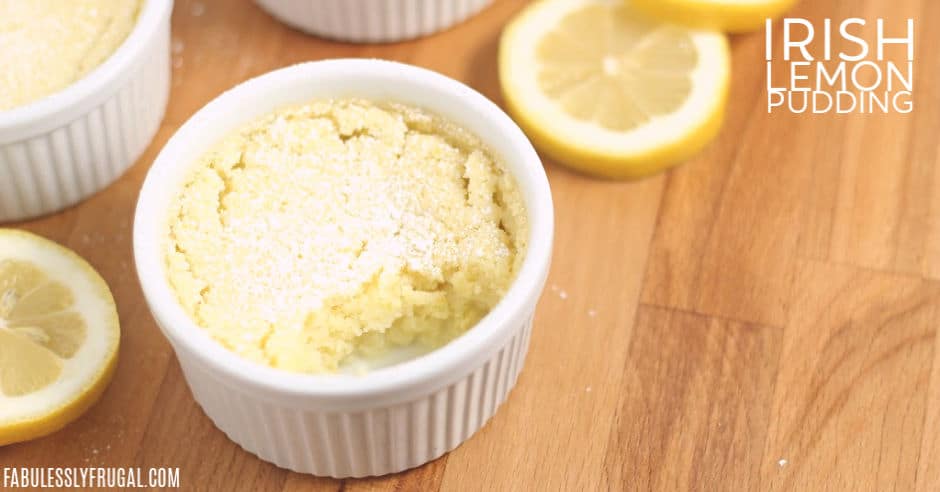
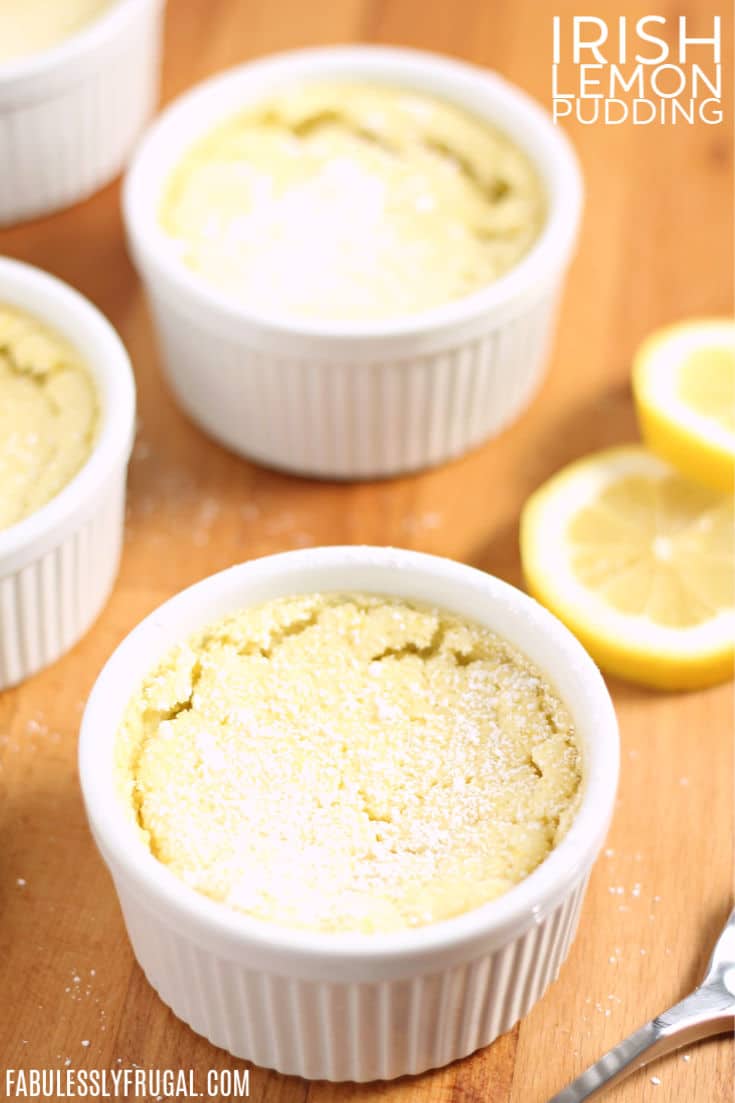
Quick answer: Irish lemon pudding is a traditional baked dessert that “magically” forms two layers—a light sponge cake on top and a soft lemon custard underneath. The key is stiff egg whites, gentle folding, and not overbaking.
Traditional Irish Lemon Pudding (A Not-Too-Sweet, Classic Dessert)
Here’s a St. Patrick’s Day dessert that isn’t green or rainbow-colored—and honestly, it’s one of my favorites because it feels like something you’d actually see on a family table. This traditional Irish lemon pudding is bright, cozy, and simple, with that old-fashioned “how did it do that?” effect: the batter separates while baking, creating a light cake layer on top and a custardy lemon layer underneath.
If you’re building a full Irish-inspired meal, it pairs beautifully with our Irish Brown Bread. And if you want a little background on why lemon desserts are so loved in traditional home baking, lemon has been a staple citrus for centuries—here’s a quick overview from Wikipedia’s lemon page (easy, high-trust reference).
What to Expect (Texture + Flavor)
This is not an overly sweet dessert. Think: bright lemon flavor, a light cake top, and a soft custard underneath. It’s delicious with:
- a generous dusting of powdered sugar
- sweetened whipped cream
- fresh berries (if you want a springy twist)
Ingredients + Exact Lemon Measurements
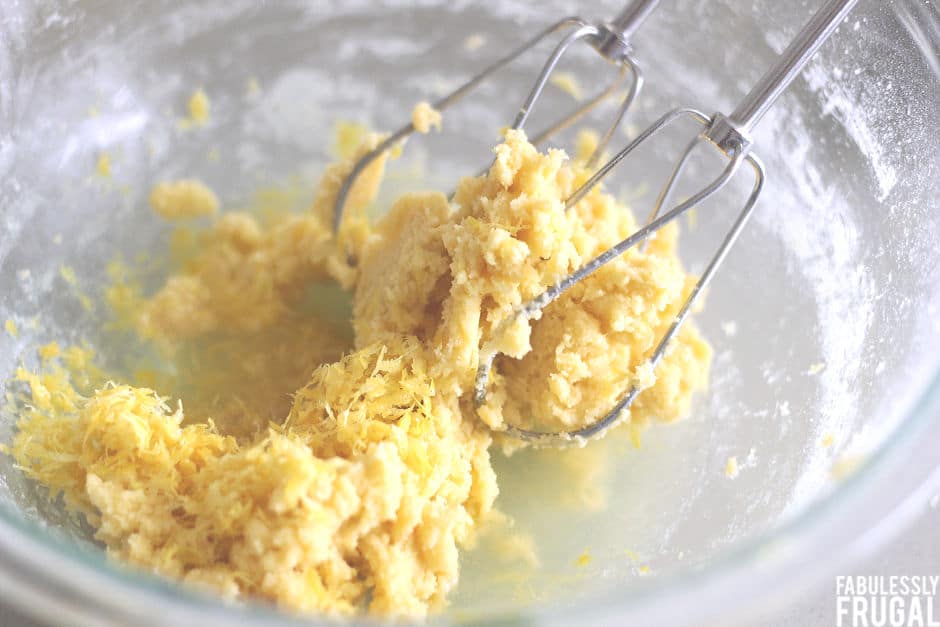
The original recipe calls for just a handful of pantry staples: butter, sugar, eggs, flour, lemons, and milk. To make this consistent every time (and avoid the “tiny lemon vs. huge lemon” problem), use these lemon amounts:
- 1/3 cup freshly squeezed lemon juice
- 1 tablespoon finely grated lemon zest
Tip: Fresh lemon juice makes a real difference here. Bottled lemon juice can taste harsh and can throw off the balance of the custard.
Equipment Options (Pie Plate, Ramekins, Springform)
You can bake Irish lemon pudding in an 8- or 9-inch pie plate or cake pan, but it also works well in:
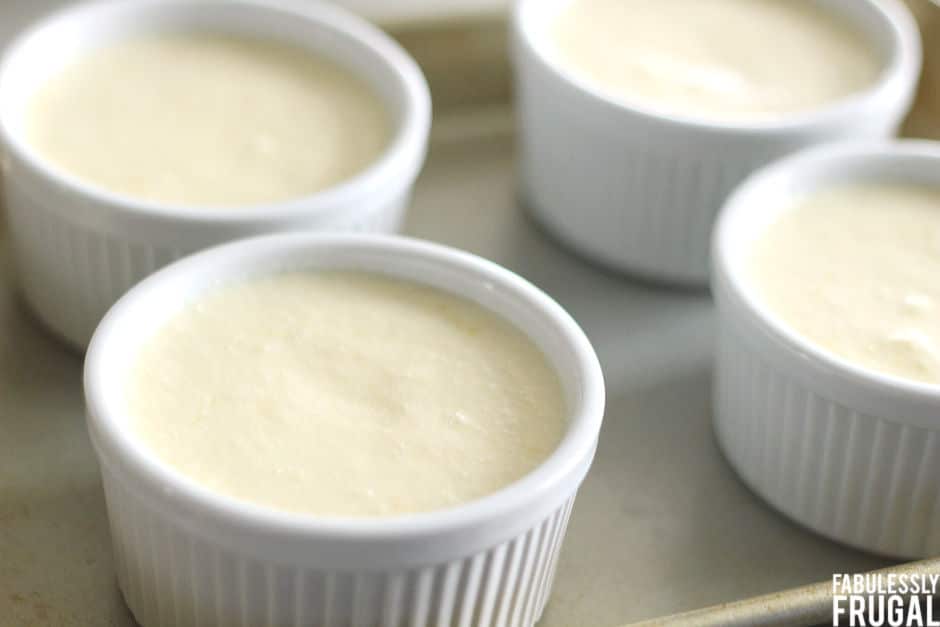
- Ramekins (great for individual servings)
- Springform pan (prettier presentation and thicker layers)
If you love a crisp base, Mary shared a great idea: add a graham cracker or cookie crust in a springform for a more structured slice. (That combo is especially nice if you’re serving this at a party.)
How to Make Irish Lemon Pudding
This dessert is simple, but it’s technique-sensitive in one specific place: egg whites. Follow these steps and you’ll get the signature two layers.
- Preheat the oven as directed in the recipe card below. (Ovens vary—see troubleshooting if yours runs hot.)
- Separate the eggs carefully. Even a little yolk in the whites can prevent them from whipping properly.
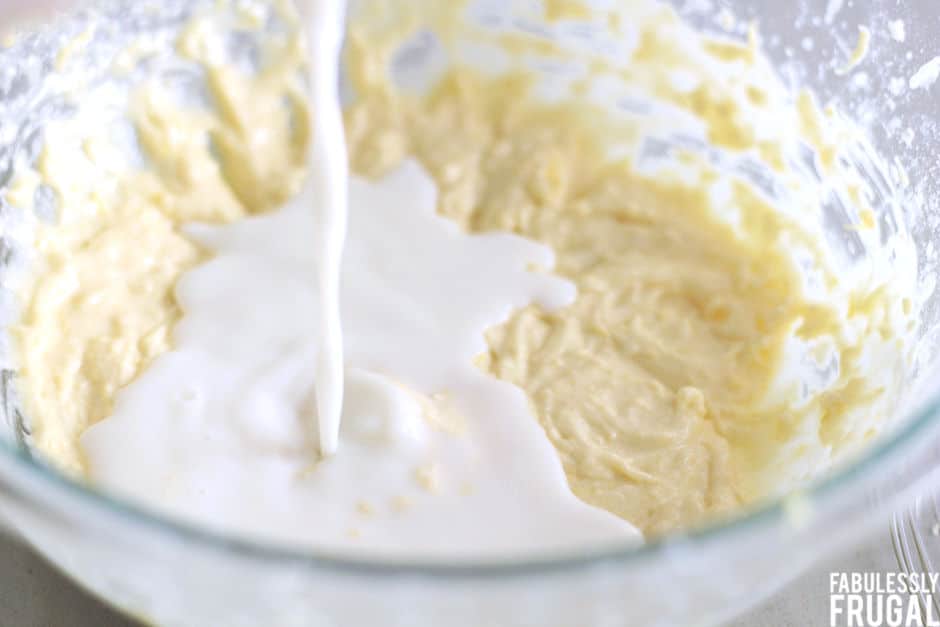
- Make the lemon base (butter, sugar, yolks, flour, milk, lemon juice, and zest) until smooth.
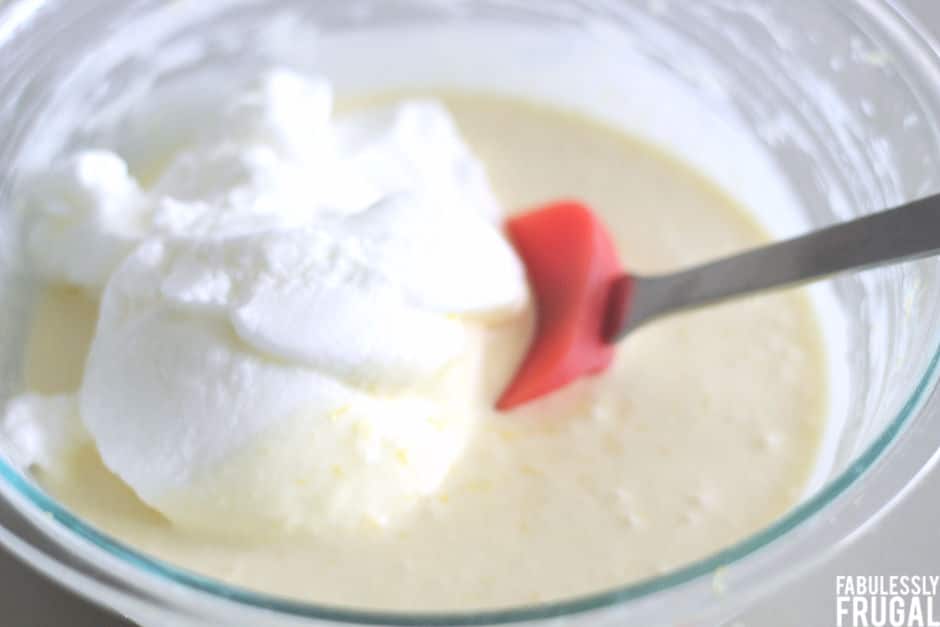
- Whip egg whites to stiff peaks. When you lift the beaters, the peaks should stand straight up.
- Fold gently (not stir) the egg whites into the lemon mixture. The batter will still look thin—this is normal.
- Bake and resist the urge to overbake. The custard needs to stay soft to set into that bottom layer.
How to Know When It’s Done
This is the #1 reason people get disappointed: it’s easy to overbake.
- The top should look set and lightly golden.
- The center should have a slight jiggle when gently shaken.
- A toothpick in the top cake layer should come out mostly clean (the bottom is custard—don’t aim for “dry”).
Troubleshooting: If It Turned Out Dry, Rubbery, or Spongy
If yours came out dry or “cottony,” here’s what likely happened:
1) It was overbaked
This dessert should not bake until fully firm all the way through. Pull it when the center still has a gentle jiggle. Overbaking can eliminate the custard layer and leave a dry sponge texture.
2) Egg whites weren’t whipped to stiff peaks
Stiff peaks create the lift and help the batter separate into layers. If whites are under-whipped, the pudding can turn dense. If you fold too aggressively, you’ll deflate the whites and lose that layered effect.
3) Lemon measurements were off
Use 1/3 cup lemon juice and 1 tablespoon zest for consistent results. Very large lemons can add too much liquid/acid; very small lemons can make the flavor fall flat.
4) Your oven runs hot
If this is a recurring issue, try baking at 325°F and checking 5–10 minutes early. Avoid convection unless you know how your oven behaves.
5) Expectations mismatch
This is a traditional, lightly sweet dessert. If you prefer a sweeter finish, serve it with sweetened whipped cream and a generous dusting of powdered sugar.
Irish Lemon Pudding FAQ
What texture should Irish lemon pudding have?
Two layers: a light cake top with a soft lemon custard underneath. It should be spoonable and tender—not dry.
Do I need a water bath?
Not always, but it can help if your oven tends to bake dry. If you want extra-custardy texture, set your baking dish inside a larger pan with hot water (a simple bain-marie).
Can I bake it in ramekins?
Yes! Ramekins are a great option and usually bake faster. Start checking a bit early compared to a full pie plate.
Can I swap orange for lemon?
Yes. Use the same amounts of fresh orange juice and zest for a milder citrus flavor.
More Easy Recipes


Irish Lemon Pudding Recipe
Equipment
- 9x9 baking pan
Ingredients
- 2 tablespoons unsalted butter room temperature
- ¼ cup granulated sugar
- 2 eggs separated
- ½ cup all-purpose flour
- ⅓ cup fresh lemon juice 2 lemons zested and juiced = 1/4-1/3 cup juice + 2 tablespoons zest
- 1 ¼ cup milk
Instructions
- Preheat oven to 350°F/175°C
- Cream the butter and sugar well. Add the egg yolks one at a time, mixing after each addition. Then add the flour, then lemon zest, and juice. Whisk in the milk and mix well.
- In a separate bowl, beat the egg whites until stiff. Fold gently into the lemon mixture until incorporated. Pour into an 8- or 9-inch pie plate or cake pan, or evenly among four 1-cup ramekins.
- Bake for about 40 minutes, until very lightly browned around the edge and mostly set. You can use a toothpick to see if top cake layer is done, but remember that the bottom should be like custard. Sprinkle with powdered sugar and serve warm with sweetened whipped cream.
Recipe Notes
Nutrition
Recipe Source: The Baker Upstairs
Trending Recipes



Comments & Reviews
Leave a Review/Reply
More Related Recipes







Trending Recipes
- Recipes
- DIY
- Deals
- Blog









Loading deal…
Popular


Recommended


About Us

At Fabulessly Frugal, our goal is to help you live HEALTHY, WEALTHY, and WISE! My team and I work hard to bring you the best, online deals, clean eating, DIY's, freezer meal recipes, and more! I LOVE coaching and inspiring people to improve their health in my fitness challenge! You should also check out my favorite cleanse! Learn more about me and the rest of my team.


Copyright © 2008–2026
Fabulessly Frugal: A Coupon Blog Sharing Gift Ideas, Amazon Deals, Printable Coupons, DIY, How to Extreme Coupon, and Make Ahead Meals. All rights reserved
AWFUL!! It was like bating a cotton ball.Total waste of ingredients.
I’m sorry to hear it didn’t work for you, Nancy!
This recipe is simple and, i imagine, very old. I have made it a few times for St. Pats day, and it pairs well with Jamesons. 😁 At this time there are only 2 reviews for it here, and one gives it a bad wrap, which is really too bad, as the exact same recipe gets raves elsewhere. I use a small spingform pan (some recommend doubling the recipe and using a 9 inch) and add a graham or cookie crust because the pudding has a pretty profile. You will never believe that you can spend so little money and get such a tasty and good looking dessert for so little effort.
Thank you, Mary! I love the idea of adding a graham cracker crust to the Irish lemon pudding too. Yum!
I just made it and it came out quite lovely and delicious.
Thank you for your comment, Carol! So glad you like it!
Delicious and easy. Made it in individual ramekins and it came out perfectly. Really nice lemon flavor.
Yes! Thank you for your comment and review, Rebecca.