
Easy DIY Fly Trap for Fruit Flies and House Flies
How to Make a DIY Fly Trap That Actually Works
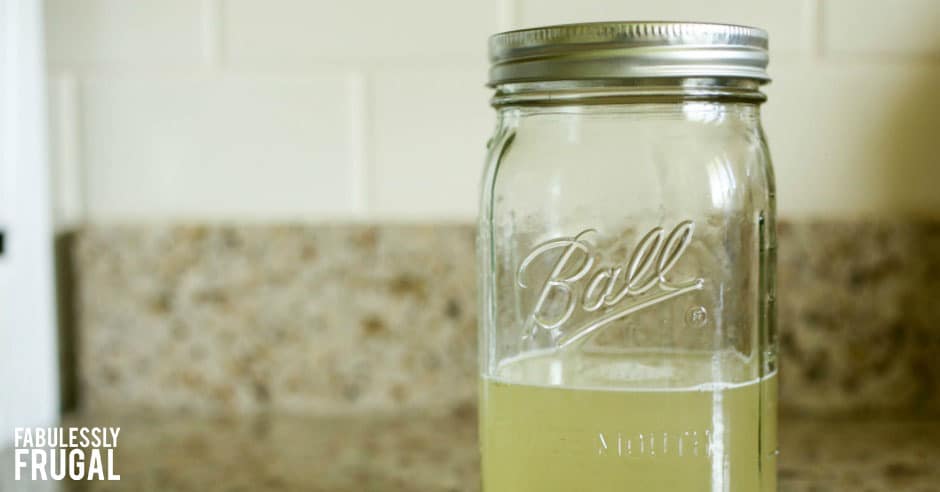
The Frugal Fix for House Flies and Fruit Flies
“One thing I hate more than anything are flies — and sometimes they just seem to appear out of nowhere. These easy traps are frugal, they work, and the kids have fun making them for me!”
— Cathy, Fabulessly Frugal
Flies are more than just a nuisance — they carry bacteria, breed in filth, and multiply shockingly fast. Whether you’re dealing with big house flies buzzing your kitchen or tiny fruit flies swarming your produce, a DIY fly trap made with basic household ingredients is one of the most effective (and cheapest) fixes out there. Takes two minutes to make, costs almost nothing, and most readers see results within hours.
Do Homemade Fly Traps Really Work?
Yes — quickly. Flies are naturally drawn to sweet, fermented smells. A homemade fly trap uses that against them: a strong-smelling attractant lures them in, and a drop of dish soap breaks the water’s surface tension so that when they land on the liquid, they sink and drown instead of flying away. Simple chemistry, zero chemicals, and it genuinely works.
Love easy frugal DIY tips like this? Sign up for Fabulessly Frugal email updates and never miss a new idea!
Why DIY Fly Traps Work

The science behind these traps is satisfyingly simple. Flies are attracted to sweet and fermented smells — apple cider vinegar, overripe fruit, and sugar water all mimic rotting organic matter, which is exactly what flies are looking for. Once a fly enters the trap and lands on the liquid, the dish soap does its job: it breaks the water’s surface tension. Normally, surface tension allows flies to land on water and fly away again. With that tension broken, the fly can’t get lift and drowns. That’s why the dish soap step is non-negotiable — without it, you’re essentially just serving flies a free drink.
According to the CDC, house flies are capable of carrying more than 100 pathogens, including Salmonella and E. coli — so getting rid of them is genuinely a food safety issue, not just a comfort one.
Indoor House Fly Trap: The Mason Jar Method
This is the workhorse trap — effective, easy to make, easy to refresh weekly. It works best for common house flies indoors near trash cans, back doors, and kitchen windows.
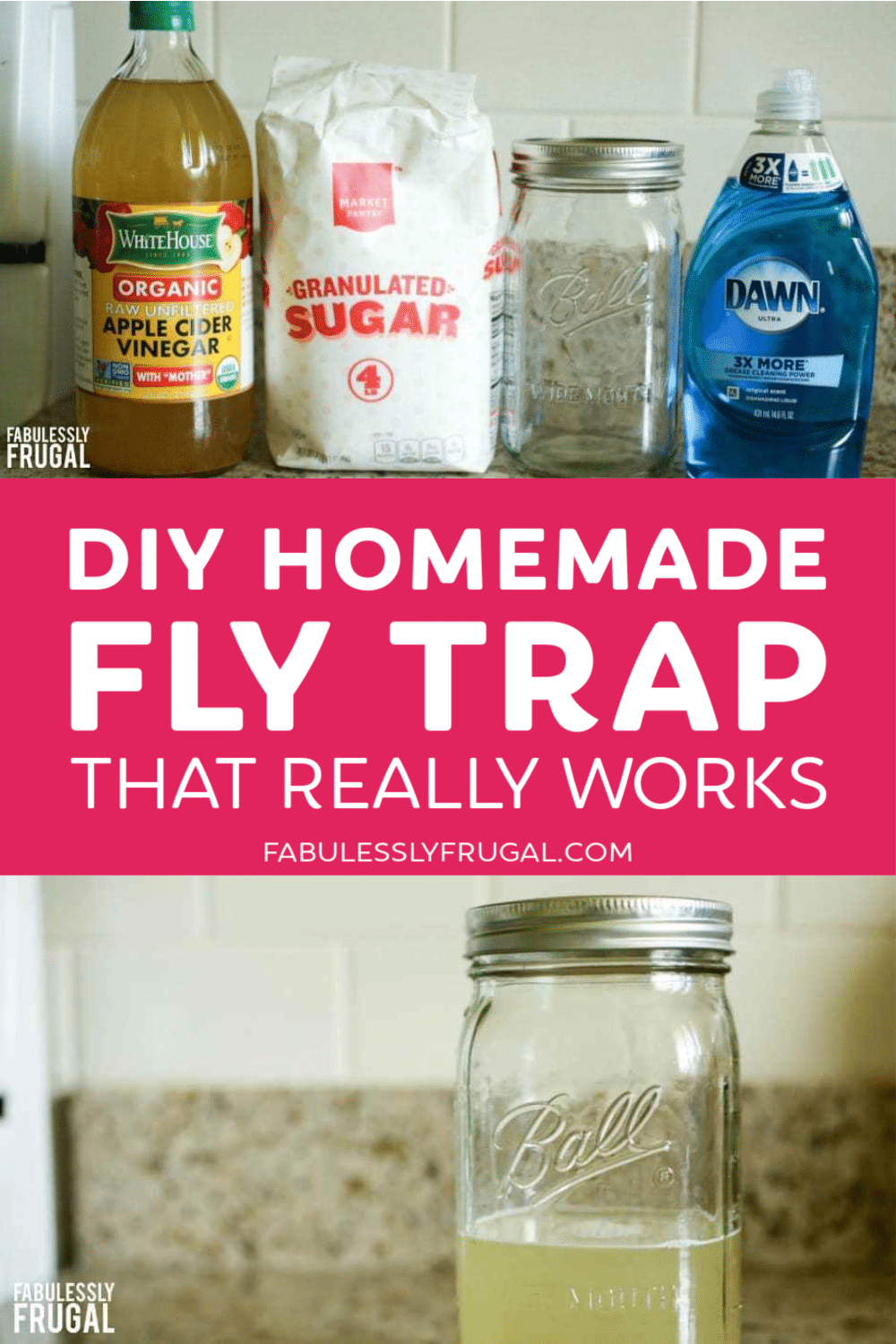
What You Need
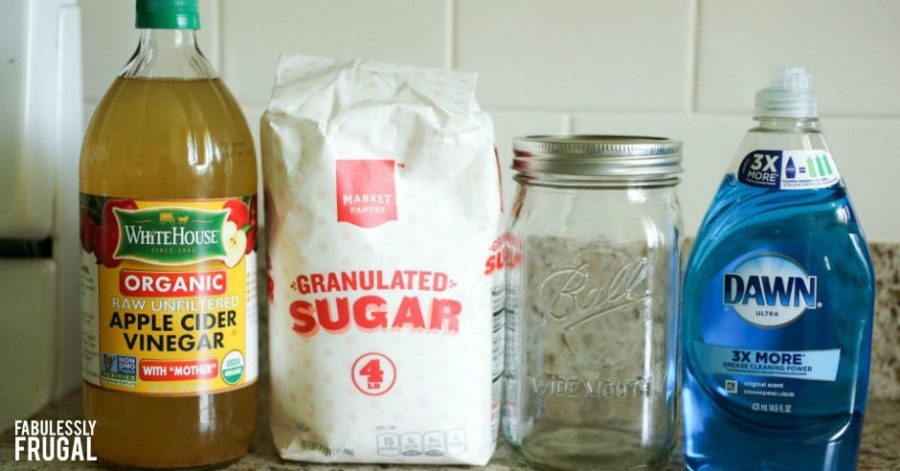
- Apple cider vinegar or white vinegar
- Sugar
- Water
- A few drops of dish soap
- Mason jar or any empty jar or bottle
- Plastic wrap and a rubber band, OR the jar lid with holes punched in it
- A fork or toothpick to poke holes
How to Make the House Fly Trap
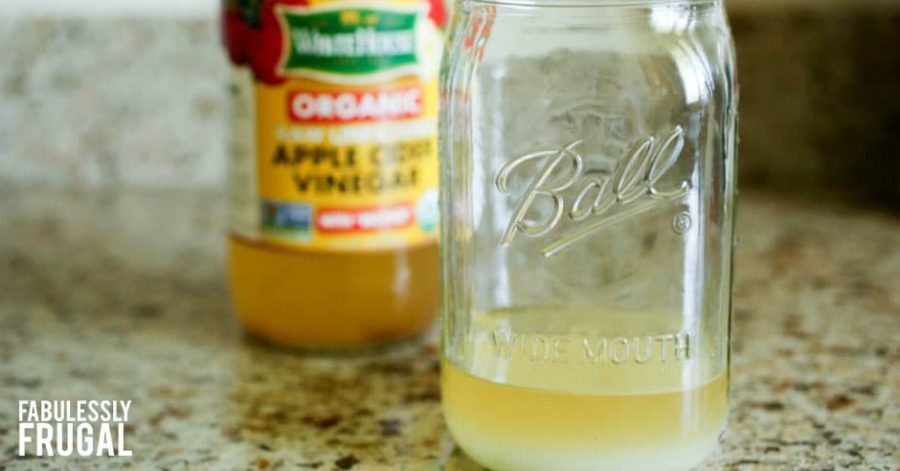
- Add to your mason jar: 1/4 cup sugar, about 1 cup of apple cider vinegar (or pour until it’s 3–4 inches up the side of the jar), 1/2 cup water, and a few drops of dish soap.
- Stir gently — no need to fully dissolve the sugar. The dissolving process contributes to the fermented smell that attracts flies.
- Cover the opening with plastic wrap and secure with a rubber band or canning ring. Or use the jar lid with small holes punched in it.
- Poke 4–6 holes in the cover using a fork or toothpick. Make them large enough for flies to enter — about pencil-tip size.
- Place near doors, windows, trash cans, or anywhere you see the most fly activity.
- Empty and refresh the mixture every 5–7 days, or sooner if it fills up.
No jar? Cut a 2-liter plastic bottle about 1/3 of the way down from the top. Flip the top portion upside down and insert it into the bottom half like a funnel — flies enter easily but can’t find their way back out. A rubber band or tape holds it together.
Indoor Fruit Fly Trap: The ACV Method
Fruit flies need a slightly different approach. They’re smaller, they breed faster (a single female can lay around 500 eggs in one lifecycle), and they’re especially drawn to the fermented, fruity scent of apple cider vinegar. This version is even simpler than the house fly trap — and it works fast.
What You Need
- Apple cider vinegar — ACV works better than white vinegar here because its fruity fermentation scent is more attractive to fruit flies
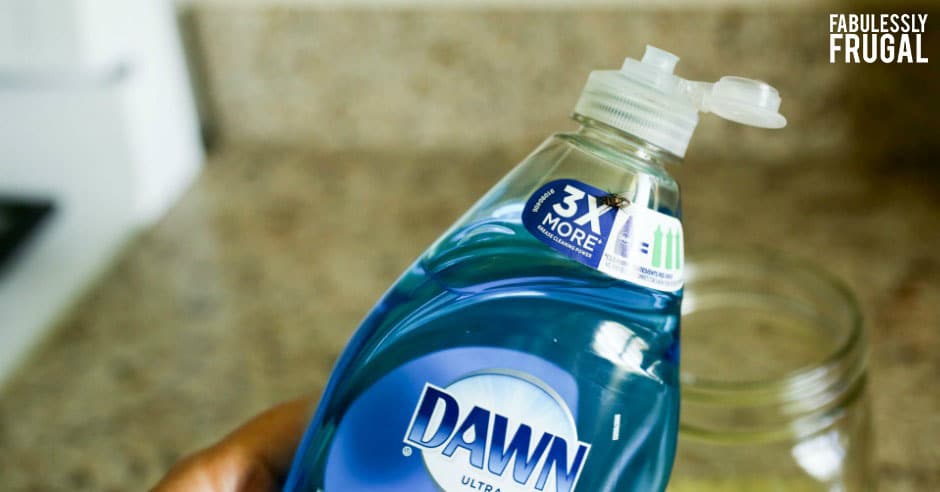
- A few drops of dish soap
- Any jar, mug, cup, or even a shot glass
- Plastic wrap and rubber band, or a cone of paper
How to Make the Fruit Fly Trap
- Pour 1/2 to 1 cup of apple cider vinegar into your container. Add a few drops of dish soap and stir gently — don’t create too many bubbles.
- Cover the top tightly with plastic wrap secured by a rubber band, then poke 4–6 small holes with a toothpick. Alternatively, roll a piece of paper into a narrow cone and set it in the opening — the narrow tip lets fruit flies in but makes it nearly impossible for them to find the exit.
- Place near fresh fruit, compost bins, sink drains, or wherever you see them clustering.
- Swap out the vinegar every 2–3 days for best results.
Outdoor Fly Trap: For Patios, Porches, and Gardens
The same vinegar-sugar mixture works outdoors too, but for serious outdoor fly problems — near trash cans, barns, or during summer cookouts — you’ll get better results with more pungent bait. The trap design is the same inverted bottle method described above.
Outdoor Bait Options
- Overripe or rotting fruit — banana peels, old apple slices, melon rinds. Effective and not too offensive-smelling for outdoor gatherings.
- Raw shrimp or fish scraps — the nuclear option. Extremely effective for outdoor blowflies and horseflies, but hang it well above nose level. Reader Darling Lopez shared a tip about this method: using decomposing protein as bait produced hundreds of flies. Reserve for serious infestations, not patio entertaining.
- Mountain Dew + dish soap — about 1 cup of Mountain Dew and a teaspoon of dish soap. Reader DJ Prengel had great success with this alternative and it’s less pungent than the raw meat option.
- Vinegar, sugar, water mix — still effective outdoors, especially near dining areas where you want something more pleasant-smelling.
Bonus outdoor tip from reader Fred Grace: Cut lemons or grapefruit in half and leave them on windowsills or near doors — flies reportedly dislike citrus. Reader Linda M. added that studding the citrus with whole cloves makes it even more effective and looks decorative too.
Reader Tips That Make These Traps Work Even Better
This post has been helping readers get rid of flies since 2015 — and the comments below have generated some genuinely brilliant upgrades over the years. Here are the ones I keep coming back to:
🔬 Why the dish soap works — the correct science:
“A fly can land on water and fly away again due to the water’s surface tension. A drop of dish soap breaks that surface tension — so when the fly lands on the liquid, it sinks and drowns instead of taking off again.” — John A. Rosendahl
🖤 The dark plastic trick — a real game changer:
“The flies don’t know the holes are there because they’re phototropic — they see light and dark contrast. Use dark plastic instead of clear saran wrap. With dark plastic covering the holes, flies will fly downward toward the light they see inside the jar instead of hovering on top of the cover.” — Justin
Reader Melissa Patton added: “Use black plastic with a dark ‘umbrella’ cover hanging loosely above the holes — it blocks light from above so the flies are drawn down into the trap instead of staying on the surface.”
🥃 Shot glasses for fruit flies:
“For fruit flies, use shot glasses filled 3/4 full with apple cider vinegar and a couple drops of Dawn apple-scented dish soap. The straight walls really prevent them from climbing back out — they just fall right in. Small enough to tuck on a kitchen windowsill so no one notices them.” — Jill Laubengayer
🍷 Red wine vinegar works even better for fruit flies:
“Red wine vinegar works better than apple cider vinegar for fruit flies — it has a fruitier scent.” — Jon A. Rice vinegar is another reader-tested option that several people reported success with.
⚡ It works faster than you’d think:
“I put it in my bathroom that had 4 flies in it. I came home 4 hours later and 3 out of 4 were in the jar dead.” — Jayda Burr
🐛 Bonus: it also catches moths and wasps:
Reader Lucille Janssen repurposed an old wasp trap with the vinegar mixture and caught flies, moths, AND black wasps that were getting into her house. Reader Mary keeps one by the garden and reports catching moths too.
Placement and Troubleshooting Tips
- Place it close to the problem. Near the trash can, back door, fruit bowl, or sink drain — wherever you see the most flies. Within a few feet of the activity is ideal.
- If flies are sitting on the cover but not going in, your holes are too small. Make them bigger, or switch to dark plastic per Justin’s tip above.
- If nothing is happening after 24 hours indoors, move the trap — flies won’t travel far to find it. Try a different spot or add a small piece of overripe fruit to boost the scent.
- For heavy infestations, use multiple traps. One near the entry point, one near where flies are congregating. Reader Linda Wasson, who battled a severe country housefly infestation, combined sticky yellow strips near doors with the vinegar trap indoors — the combination worked better than either alone.
- Refresh weekly. The mixture loses its scent potency after about 5–7 days. Regular refreshing keeps it working at full strength.
- The mixture attracts flies — don’t spray it. One reader asked about using it as a spray around the house. It doesn’t repel flies, it attracts them — you want it contained in a trap, not spread around your kitchen!
How Flies Get In — and Why They Seem to Appear Out of Nowhere
This is the question I hear most often — and the one that drives people the craziest. You haven’t left food out. The kitchen is clean. So where are they coming from? Here’s what’s actually happening.
The Most Common Entry Points
- The front and back door. This is the #1 culprit for house flies. Every time a door opens, flies slip in — especially in summer when they’re most active outside. Reader Raymond put it plainly: “Probably the front door!!!” Screen doors help, but flies are fast.
- Torn or poorly fitted window screens. A small tear or a screen that doesn’t sit flush is all a fly needs. Check every screen in your kitchen and dining area — even a gap at the edge counts.
- Gaps around pipes, vents, and utility openings. Any unsealed opening where a pipe or cable enters the wall is a fly highway, especially in older homes.
- Fresh produce and grocery bags. Fruit flies in particular hitchhike on produce bought at the store or farmers market. Eggs are sometimes already laid on the skin of fruit before it reaches your kitchen — you bring the problem home without knowing it.
- Potted plants brought in from outside. Soil can harbor fruit fly larvae. Plants moved indoors in late summer or fall often bring a surprise with them.
Why They Suddenly “Appear Out of Nowhere”
The frustrating truth is that flies are usually already in your home before you see them — you just can’t see the eggs. Here’s how the cycle works:
- Fruit flies breed invisibly. A single female can lay up to 500 eggs — in the skin of overripe fruit, in the organic buildup inside your drain, in a forgotten corner of your recycling bin, or in the damp soil of a houseplant. The eggs hatch in as little as 24–30 hours when temperatures are warm. By the time you notice flies, there are already hundreds more coming.
- House flies breed outdoors and move in. They’re attracted to food smells, warmth, and light. A neighbor’s garbage, a compost pile, or animal waste nearby can spike the outdoor population overnight — and they’ll follow any opening into your home.
- Warm weather accelerates everything. Fly populations can double in days during a heat wave. What was a non-issue in spring becomes an infestation in July.
How to Find the Source
The trap will actually help you identify the source — place traps in multiple rooms and the one that fills fastest tells you where the problem is centered. Then check:
- Sink drains and garbage disposal. The single most overlooked fruit fly breeding ground. The organic buildup inside drains is perfect for eggs. Pour boiling water down the drain, or use a baking soda and white vinegar flush, once a week during fly season.
- The bottom of your fruit bowl. Turn every piece of fruit over and check underneath. One soft spot on one forgotten piece of fruit is enough to start a colony.
- The recycling bin. Rinsing cans and bottles before recycling is one of the most effective things you can do. The residue in an unrinsed juice bottle is a five-star resort for fruit flies.
- Under and behind appliances. A piece of food that rolled under the refrigerator or stove months ago can become a breeding site you’d never think to check.
- Trash cans without lids. Even a small open bin under the sink is enough. Switching to a lidded bin makes a significant difference.
How to Prevent Flies From Coming Back
Traps catch the flies you already have. These habits stop new ones from moving in:
- Keep all trash cans tightly lidded, including small bins under the sink.
- Move overripe fruit to the fridge — especially bananas, which are a top fruit fly magnet.
- Flush sink drains with boiling water or a baking soda and vinegar mixture once a week in summer.
- Rinse every recyclable before it goes in the bin.
- Repair torn window screens and make sure screens sit flush in their frames — even a small gap is enough.
- Use a screen door or keep the back door closed during peak fly hours (mid-morning to early evening in warm weather).
- Seal gaps around pipes, vents, and utility openings with caulk or foam filler.
- Clean up pet food bowls promptly and don’t leave wet food sitting out.
- Inspect produce before bringing it inside — especially anything bought from outdoor markets.
- Keep a trap running proactively during fly season even when you don’t see flies. Catching them early prevents the population from building.
More Frugal DIY Ideas You’ll Love
- 17 DIY Cleaners That Work Like Magic
- 9 Homemade Toilet Deodorizers and Fresheners
- DIY All Natural After Sun Spray and Lotion
- 15 Best DIY Face Masks for Acne, Dry Skin, and More
- 10 Natural DIY Hair Conditioners for Every Hair Type
Frequently Asked Questions About DIY Fly Traps
What is the best bait for a homemade fly trap?
For house flies indoors: apple cider vinegar, sugar, and water with a few drops of dish soap. For fruit flies: apple cider vinegar alone (or red wine vinegar — readers report it works even better). For outdoor use with severe fly problems: overripe fruit or raw fish/shrimp placed above nose level.
Why do you add dish soap to a fly trap?
Dish soap breaks the water’s surface tension. Without it, a fly can land on the liquid and fly away again — surface tension allows insects to float. The soap eliminates that tension so flies sink and drown when they touch the liquid. Never skip this step.
Can I use white vinegar instead of apple cider vinegar?
Yes, white vinegar works — but apple cider vinegar is more effective, especially for fruit flies, because its fruity fermented scent is more attractive. Red wine vinegar is another strong option for fruit flies specifically.
Why aren’t the flies going into my trap?
Most likely the holes in the cover are too small, or the flies can see the clear plastic and aren’t flying toward it. Try making the holes larger, switching to dark plastic (flies are phototropic — they fly toward light, so dark plastic encourages them to fly down into the jar), or moving the trap closer to where you’re seeing fly activity.
How long does a homemade fly trap take to work?
Most readers see flies in the trap within a few hours. One reader reported catching 3 out of 4 flies in a bathroom within 4 hours. Refresh the mixture every 5–7 days to keep it effective.
Why do I suddenly have so many flies in my house?
Most likely eggs were already present before you noticed the flies — in a drain, overripe fruit, or a recycling bin. Fruit flies can go from egg to adult in as little as a week when it’s warm, so populations appear to explode overnight. Check your sink drains, the bottom of your fruit bowl, and your recycling bin first — those are the most common hidden sources.
Where are flies coming from in my house?
The front or back door is the most common entry point for house flies — every time it opens, flies slip in. Torn or ill-fitting window screens are the second biggest culprit. Fruit flies often hitch rides on fresh produce or potted plants brought in from outside. Check for gaps around pipes and utility openings too — any unsealed opening is an entry point.
Is this safe around kids and pets?
The ingredients — vinegar, sugar, water, and dish soap — are non-toxic. That said, keep jars out of reach of small children and curious pets, as the liquid can be a drowning hazard for tiny animals.
Will this work for outdoor flies?
Yes, with the right bait. The vinegar-sugar mixture works outdoors for mild to moderate fly problems. For serious outdoor infestations — near barns, livestock, or trash — use more pungent bait like overripe fruit or raw shrimp in the inverted bottle trap, placed well above nose level.
How often should I change the mixture?
Every 5–7 days indoors, or every 2–3 days for the fruit fly trap since ACV loses potency faster. Change it sooner if the jar fills up with flies — that’s a good problem to have!
Final Thoughts
Between the mason jar version, the shot glass trick, and the dark plastic upgrade from our readers, you’ve now got more fly-fighting power in your kitchen cabinet than most store-bought traps can offer. And now that you know how they’re getting in and where they’re breeding, you can stop the problem at the source instead of just playing catch-up. Try one this week and let me know how it goes in the comments — and if you’ve got a tip that’s worked for you, share it below!
⭐⭐⭐⭐⭐ If you try it, I’d love to hear how it turned out! Please leave a comment below — your reviews help other readers find DIY projects worth trying, and they mean the world to a small business like ours. ❤️
Want more easy DIY ideas, frugal tips, and money-saving recipes delivered straight to your inbox?
Easy DIY Fly Trap for Fruit Flies and House Flies

Ingredients
- 1 cup apple cider vinegar (or white vinegar)
- ¼ cup sugar
- ½ cup water
- Few drops dish soap
- Mason jar or empty bottle
- Plastic wrap or jar lid
- Rubber band or canning ring
- Fork or toothpick to poke holes
Instructions
- Add to your mason jar: 1/4 cup sugar, about 1 cup of apple cider vinegar (or pour until 3–4 inches up the side of the jar), 1/2 cup water, and a few drops of dish soap.
- Stir gently — no need to fully dissolve the sugar. The dissolving process contributes to the fermented smell that attracts flies.
- Cover the opening with plastic wrap secured with a rubber band or canning ring, or use the jar lid. Poke 4–6 pencil-tip-sized holes in the cover.
- Place near doors, windows, trash cans, or wherever you see the most fly activity.
- Empty and refresh the mixture every 5–7 days, or sooner if it fills up.
- NOTES
- The dish soap breaks the water's surface tension so flies sink and drown — never skip it. Flies not going in? Switch to dark plastic wrap. For fruit flies: use apple cider vinegar only, no sugar or water needed. Replace every 2–3 days.
Notes
If you don't have a jar around, you can use an empty 2-liter bottle cut in half with the original opening flipped upside down and put into the bottom half.
Trending Diys

Comments
Leave a Reply
More Related Diys






Trending DIY Projects
- DIY
- Recipes
- Deals
- Blog








Report a Problem
Please select the problem you are facing with this deal:
- Price Increased
- Price Decreased
- No longer available
- Expired
- Link doesn't work
- Suggestion
- Compliment
- Other
Add more details:
Thank you for your feedback. We really appreciate it.
Enter your email address if you would like
to receive a follow up.
Please Try Again
Thanks for providing the email address.
We will reach out to you as soon as possible.


Loading deal…
Popular


Recommended


About Us

At Fabulessly Frugal, our goal is to help you live HEALTHY, WEALTHY, and WISE! My team and I work hard to bring you the best, online deals, clean eating, DIY's, freezer meal recipes, and more! I LOVE coaching and inspiring people to improve their health in my fitness challenge! You should also check out my favorite cleanse! Learn more about me and the rest of my team.

Copyright © 2008–2026
Fabulessly Frugal: A Coupon Blog Sharing Gift Ideas, Amazon Deals, Printable Coupons, DIY, How to Extreme Coupon, and Make Ahead Meals. All rights reserved
Great idea! This simple project will definitely come in handy… especially for outdoor get-togethers.
Yes, it does!!
What does the dish soap do?
Hi Diane, good question! The dish soap is a little sticky (on legs and wings) and slows the fly down.
This isn’t correct – John’s answer below is correct.
Hi Cathy! I am an ardent Pinerest user. Most all of them are very good. This one didn’t work for me. Not 1 nasty fly in it this am. There were plenty in my house to take a dip in this delicious special made mix for them. I found 1 in am empty wire bottle that I must not of rinsed out after i emptied it last night. So think I’ll go with a little bit of wine in a glass. They seem to like to take a dip in my glass of wine. Have wasted more wine because of these dirty critters!!! Got some out now. Trouble is I pour them a taste and think I need a glass!!! Oh well it’s Sat!!!!!!!
Ha ha! Nice, Sharon. Sorry to hear this didn’t work for you! Seems like you’ve found yourself a (less than desirable) solution? 🙂
AMAZING going to give this a try for sure !
Nope. The dish soap breaks the surface tension of the water/vinegar so the flies drown, instead of flying off again.
The detergent breaks the surface tension of the water.
A fly can land on water and fly away again, due to the water’s surface tension. A drop of dish soap breaks the surface tension of water, so when the fly lands on the water it will simply slip into the water and drown.
It will break the viscosity on the water and if the flies touch the water there is a better chance of the drowning.
Keep them from getting out and also hope it makes it smell a little better 😬
Breaks the surface tension on the water
from. what I was td it makes it so they can not fly
the dish soap makes the flies stick to the surface of the cider, without it they can just land on the water, drink up, then fly away… the soap messes with the surface tension of the water/cider
Makes it harder to get out of water.
The dish soap breaks the “Tension” of the water surface or the flies could walk on the water.. By breaking this tension the flies will sink into the water and drown,, Other wise you will have a trap of live flies trying to escape!!
It breaks the water surface tension so the flies will drown and not be suspended on the surface.
I had bought a wasp trap several years ago. I didn’t have much luck with their bait. I decided to use the top part of the trap for the vinegar mixture. I was amazed at how many flies, moths, etc. it caught. I had to dump it several times. This fall I’ve been bothered by large black wasps around the outside of the house and some actually get in. This bait works for them. I hung it from a hook outside on the porch.
Nice hack, Lucille! Thank you for taking the time to share that!
It also is attracting wasps, which I seem to have plenty of.
Thanks for this tip. For whatever reason, my house is so infested with houseflies, not gnats or fruit flies, but big old gross houseflies. We’ve have had some success with the tacky yellow strip things, and also the really stinky barn bags used to attract horseflies. We also have one of those handheld electric fly swagger gadgets, it kinda works about 50% of the time. Granted we live in the country, 21 years now, but I’ve never ever experienced something at this magnitude. I have multiple yellow wasp traps, I’m gonna give your tip a try. Fingers crossed!
For fruit flies inside the house I like to use shot glasses filled with apple cider vinegar and Dawn apple scented dish soap. They are small so I can put them in my kitchen window so no one notices them. I fill them 3/4 full with apple cider vinegar and then just a couple of drops of Dawn apple scented dish soap..this has worked really well in the past. It’s the straight walls of the shot glass that really prevents them from climbing back out. They just fall right in and they don’t come out!
The shot glass idea is great Jill! Thanks for sharing!
I don’t have any apple cider vinegar, no wine either. I have some Kombucha. Can I use that? TY
Hi Juju – I’m not super familiar with Kombucha, but I think it’d be worth giving it a try! Will you come back and let me know how it goes? Thank you!
i have used this method for a long time,well sorta, I only used the apple cider vinegar. It works . I have even used Rice vineger (couldn’t find my apple cider or even just vineger in my house) and it worked great!!, almost want to say it might of worked better / faste. I don’t use much,maybe a couple of tablespoons in a small bowl or glass.
Thanks
Plastic drink bottles make good cheap throw away containers. Discard top. Cut top off plastic bottle. Invert the top inside the base. Fill bottle as per recipe. Place in discreetly in gardens. Discard bottle with dead insects when full. Also fly’s hate citrus so cut some lemons, grapefruit, etc in half and leave on window sills or around doors. Both ideas work a treat.
Thank you so much for the ideas! I love the lemon one!
I was wondering, if lemons work, would lemon-scented candles? Maybe lemon scented anything!
Much better than the vinegar smell.
Plastic water bottles or “drink bottles” is a great idea! Thanks for sharing
I don’t know which idea to try first.
I tried the lemons and didn’t work for me.
Try cloves in the citrus friuts and set on table
Great idea Amber. I HATE FLY’S. Hope this works for me. I will definitely try this. Thanks
What does the 3-4 inches of apple cider vinegar mean?
Add apple cider vinegar to the jar until it measures about 3 to 4 inches up the side of the jar…or just use about a cup.
I hate flies and have tried this with the water bottles and in a jar, after 5 days, the jar is at zero, the flies just walk along the saran wrap. The jar, I have one fly each in two jars! I will try the lemons.
How are the lemons working for you Marilyn?
I’ve had the same experience… the flies just sit on the saran wrap, don’t go in. I even put some of the solution along the rim of the holes but then the flies just walk along there and dont need to go any further.
I wonder if they are getting smarter? 😀
Put bigger holes in the Saran Wrap.
The flies do not know that the holes are there. They are phototropic (they see light and dark contrast. Instead of saran wrap, use a dark plastic, like part of a black trash bag. Works great!
I’m trying it now… hope it works cuz I don’t know where these flies are getting in my house from but it needs to stop…
Oh gosh me too. Flys driving me crazy. I have a dust buster Vaccum and l take off after them with it an catch a lot on windows.
Probably the front door !!! That’s where I get mine. !!!!
Will this work outside? I need something to reduce flies during cookouts. Thanks for the tips.
Hi Sammy! Give it a whirl and let us know how it goes!
I have just tried all the suggested mix’s of solutions, just Apple cider vinegar, a mix of both, and then just white, with the recipe for the indoor flies we have here in Las Vegas, NV and so far nothing has worked. I’m very flustered! Our neighbors have a zoo in their backyard it seems! I don’t mind the animals, just these flies!
That sounds awful! Maybe set up a sticky fly trap outside your doors to try and capture some before they even get into your house? https://amzn.to/2YICquz
You could also put some leftover/old raw chicken in the jar and put it outside (it will smell horrible, so you won’t want it inside)…. good luck!
This lady added a rotted shrimp to her trap and she had hundreds and hundreds of flies in it. You just have to hang it outdoors above nose level because it stinks! After a while the bodies of the dead flies pile on each other and help mask the smell, her words, but he said of all the recipes she’s tried, and products/ bait he’s bought, that is the best hands down. Here is the link to read more about it: https://www.theartofdoingstuff.com/the-best-homemade-flytrap-and-it-probably-isnt-the-one-you-see-all-over-pinterest/
Hope that helps!
Can you put the solution in a spray bottle and spray it around the house and outside on the porch
The solution actually attracts the flys and then captures them. So I for sure would not spray this around the house (plus it will be smelly!) 🙂
It doesn’t seem to be working. Made it yesterday and zero flies.
I bought some natural spray a week ago that is made from lemongrass oil but it doesn’t smell very good I was hoping this would work!
Sorry to hear that… unfortunately, the stinky smell is required to attract the flies!
I’ve tied this solution, even added syrup to the recipe but not a single fly. So, I started spraying the vinegar directly on my dogs, and rub into their coat, which needs to be re-applied every few days but whatever works! Any effective solutions for house flies will be greatly appreciated! I’ve purchased fly traps but probably too smelly for inside the house or garage. Please advise!!
Great idea about spraying the dogs. If you don’t want traps in the house, then I’d catch them outside, around the entrances to the house. It does require smelly things to attract the flies, so keeping it outside the doors is a good alternative. Good luck!
In researching solutions to this problem such as these I came across one that is pretty much the same thing or idea as this (but they use rotting food, animal droppings etc. Things the flies are most definitely attracted to) but the only difference, which I found to make complete sense and may be what some of the failed projects I’ve read above may beneifit from was they used black plastic instead of clear syran wrap and also put a black cover over the very top above the holes. The cover wasn’t touching but hungover sort of like an umbrella. But the reasoning they had was some fancy term, but explained that flies are naturally attracted to light (hence they are found in windows and doorways etc. a lot). So they use that against them or to our advantage. So by using black plastic to put the holes in they are less likely to want to fly back up to it or stay on it. And the black umbrella type thing that hangs just above that is use to block as much of the light coming through the holes as possible. Therefore setting it up so that the flies will want to fly down into the jar or bottle (clear would be best) going towards the light they see. Genius!!
Oh wow! I’ve never even heard of black plastic wrap! But sure enough, here it is! https://amzn.to/2KK8sT2
We don’t have flies yet where I live, so as soon as they start showing up, I’m going to test this out! Thank you Melissa!
I’m surprised it worked that fast. I put it in my bathroom that had 4 flies in it. I came home 4 hours later and 3 out of the 4 were in the jar dead. This is a true miracle.
https://s.amsu.ng/wJO8d1Yv4WYN
I’m not sure if it will work or not but the link above is a link to a photo of it.
Hi Jayda – great to hear it worked well for you! Bummer, that link isn’t working for me! 🙂
Just made the jar. fingers crossed. I don’t know if anyone noticed the fly on the dawn bottle. how ironic. LOL!
That is hilarious! I seriously never noticed that before!! 😀 Let us know how it goes!
I was wondering if I was the only one!
Any recipe with household items to use a a fly spray, to kill flies not just keep them off? I would like to spray around the house and barn. I love using house hold products. THANKS!!
Deb, have you ever considered essential oils?
I have had success with a mix of Mountain Dew ( about a cup) and a teaspoon of dawn dish soap.
That is a really interesting contraption! I’ll have to test that out! Thanks for sharing DJ!
Does this work for house flies or just fruit flies?
For some, this works for house flies!
For fruit flies you only need a little ACV and a drop of soap, very very effective. For house flies your recipe does not work at all 🙁
Thanks, Cathy! Good trap and simple quick to make with household stuff.
I found that the mixture also attracts moths. We keep one by the garden and one by the house.
Nice!
It worked so well that the fly wouldn’t even let me finish making the mixture before he landed on the mouth of the cup. Being greedy was his downfall because I just gave him a little shove into the cup and down he went. He should be swimming with the fishes in the Mississippi River by now…
Ha ha! I love it Gloria! 🙂
chicken stock in bought “Environtrap” jars works brilliantly
Do u have a recipe for red wasps? The nests are behind outside walls and we simply cannot get to them. Sprays don’t work well, trust me, we have spent a fortune trying to by what’s on the shelves, but they kill 4 or 5, but not handy when there’s 40 or more. I have been stung 13 times this year and I want them to be gone finally. Please help
That sounds terrible! Sorry I can’t help you with that!
We used this in our classroom. Only 2 flies were caught, but it was absolutely FULL of fruit flies!! Thanks for sharing!
I’ve heard of people catching flies and feeding them to their chickens… Would I use the same filler?
how long does it take to work
Hi Sophia, this should start to work within a day or so.
I found that red wine vinegar works better that apple cider vinegar for fruit flies. It has a fruitier scent.
This works beautifully!